Author - Ivana

Utjecaj pandemije koronavirusa na kvalitetu obrazovanja na sveučilištima

Obrazovni sustav se uslijed pandemije koronavirusa susreo s mnogim ograničenjima i izazovima. Kako bi izbjegla ponavljanje godine, mnoga su sveučilišta, više ili manje uspješno, nastavila s radom online putem. Kako su studenti prihvatili održavanje nastave na daljinu i prigrlili digitalnu etapu studiranja, te s kojim su se novim problemima suočili tijekom online studiranja, pročitajte u nastavku.

Pandemija koronavirusa i mjere uvedene s ciljem sprječavanja njegovog širenja i minimiziranja zdravstvenih rizika u velikoj su mjeri utjecali na sve sfere naših života. Jedna od najpogođenijih društvenih skupina svakako su studenti, koji su se osim suočavanja sa osiromašenim društvenim životom morali priviknuti i na studiranje u izvanrednim uvjetima, odnosno prelazak na digitalni oblik nastave.

Prema riječima profesorice i bivše ministrice znanosti i obrazovanja Blaženke Divjak, Hrvatska je u početcima održavanja nastave na daljinu u usporedbi s drugim europskim zemljama odgovorila vrlo brzo i iznad očekivanja. Škole su se ipak malo bolje snašle u novonastaloj situaciji zbog centralnog upravljanja, dok se reakcija sveučilišta koja imaju veći stupanj autonomije mogla promatrati samo zasebno, snalaženje u organizaciji predavanja i ispita variralo je od fakulteta do fakulteta. Dok su se mnoge zemlje susrele s teškoćama pri prelasku na online nastavu, Hrvatska je reagirala pravovremeno – učenici i profesori imali su priliku nadograditi svoje vještine informatičke pismenosti u sklopu edukacija i projekata i nastava se uspješno nastavila održavati u online obliku. No, koliko je kvaliteta online podučavanja uistinu usporediva s klasičnom nastavom, naročito u visokom obrazovanju?

Prema podatcima istraživačkog projekta koje je proveo Odsjek za psihologiju Filozofskog fakulteta Sveučilišta u Zagrebu, većina studenata je svoje stambene i materijalne uvjete ocijenila kao zadovoljavajuće i mogla se bez smetnji posvetiti online studiranju. 90% studenata imalo je na raspolaganju stalno dostupno osobno računalo. Zanimljiv podatak je da, suprotno očekivanom, većina studenata nije imala većih problema s tehničkim uvjetima i iskusila je tek povremene prekide internetske veze i pada sustava CARNET-a. Većina studenata i djelatnika sveučilišta zadovoljna je svojim digitalnim kompetencijama, tako da im susret s platformama za učenje i online alatima nije bio stran.

Jedna od otežavajućih okolnosti u uvjetima studiranja u doba pandemije je pristup i nabava literature, budući da upute profesora o literaturi nisu bile jasne kao na predavanjima uživo, a pristup knjižnicama i čitaonicama bio je ograničen ili nemoguć. Upravo to je i uzrok problema s pronalaskom mirnog mjesta za učenje, jer velik dio studenata, naročito onih koji su ostali u studentskim domovima kao mjesto za učenje preferirao je knjižnice. Često prijavljena teškoća s kojom su se studenti susreli jest manjak motivacije i otežana samoregulacija u novim uvjetima studiranja (60%). Gotovo trećina studenata požalila se na količinu zadataka koje su otežano izvršavali u odnosu na studiranje prije pandemije.

Zabrinjavajući podatak iz istraživanja AZVO-a je da čak 50% ispitanih studenata kvalitetu online poučavanja procjenjuje lošijom nego prije karantene, naročito vezano uz praktični rad i vježbe na fakultetima (57%). Mnoge studente je zabrinulo hoće li uspjeti steći kompetencije koje zahtijeva njihova buduća karijera, a čak tri četvrtine studenata opterećivali su online ispiti i njihova izvedba te (ne)mogućnost uspješnog završetka akademske godine. Čitav je spektar iskustava vezanih uz provođenje online ispita. Dok se dio studenata žalio na lošu organizaciju online ispita –  prekratko vrijeme koje su imali na raspolaganju za rješavanje i postavke poput nemogućnosti vraćanja na prethodna pitanja, mnogi su izvijestili i o povećanju učestalosti neetičnog ponašanja, odnosno češćem pribjegavanju varanju na ispitima nego prije karantene. Ishodi učenja i kriteriji su se prema tome prilično promijenili, tako da trećina studenata smatra da pri online studiranju ocjena nije temeljno mjerilo znanja niti vjerodostojan pokazatelj savladavanja gradiva.

Profesori i studenti jednoglasni su u odgovoru da je interakcija pri izvođenju nastave online i sama komunikacija između profesora i studenata te studenata međusobno puno slabija nego prije pandemije. Zajedničko mišljenje imaju i oko opterećenosti online nastavom; veći teret ne osjećaju samo studenti, već i profesori pri organizaciji kolegija online putem.

Jedan od najvećih problema, kojeg su žrtve ne samo studenti, već cjelokupna populacija suočena s pandemijom jest narušeno psihološko zdravlje. Manjak socijalnih kontakata u dugom periodu ostavio je ogromne i nepovratne posljedice na mentalno zdravlje, naročito kod studenata koji su prethodno imali u manjoj ili većoj mjeri izražene psihološke smetnje. Došlo je do porasta razina anksioznosti, depresije i stresa u općoj populaciji. Psihički problemi s kojima se studenti suočavaju za vrijeme pandemije mogli bi ostaviti neizbrisiv trag i na fizičko zdravlje, te voditi kroničnim bolestima i brojnim drugim zdravstvenim problemima. Iako je većina studenata imala podršku obitelji, nedostajao im je kontakt s prijateljima, koji u adolescenciji igra veliku ulogu za potpun razvoj osobnosti. Dug period izolacije, praćenje rasplamsavanja pandemije preko društvenih mreža i drugih medija, bolest u obitelji, neizvjesnost koja je postala naša nova realnost i  brojni drugi stresori zahvatili su cijelu populaciju, a oporavak je dug i težak.

Lošije psihičko stanje rezultiralo je i time da se čak 40% studenata nije moglo koncentrirati na akademske obveze u mjeri u kojoj su to obavljali prije pandemije. Nedostatak izravnog kontakta ne predstavlja prijetnju samo opstanku i održavanju prijateljskih i ljubavnih veza, već i samom iskustvu i uspješnosti poučavanja. Mogu li online sastanci, snimke predavanja i pisani materijali biti dostojna zamjena izravnom prenošenju znanja, naročito praktičnih?

Online nastava ipak je ponudila i nove, fleksibilne načine učenja preko različitih platformi i metoda koje se nisu prakticirale prije pandemije. Mnogi studenti isprva su osjećali rasterećenje zbog oslobođenog rasporeda, tako da su slobodno vrijeme mogli organizirati bolje i raditi uz fakultetske obveze. Grupni rad se također pokazao kao dobra metoda, a studenti su putem izlaganja seminara mogli vježbati svoje govorničke sposobnosti, a da nisu direktno suočeni s publikom. Online nastava sa sobom je donijela i privilegiju ugošćivanja brojnih predavača do kojih je otežano doći u normalnim okolnostima. Otvorile su se i mogućnosti poput održavanja online predavanja u budućnosti, ukoliko se pojavi problem kao što je manjak profesora, studenti ili profesori koje žive u udaljenim područjima ili su zbog različitih razloga spriječeni prisustvovati nastavi. Upoznati s varanjem na ispitima, mnogi profesori su tražili načine ocjenjivanja kroz primjenu i praktična znanja, što je dovelo do jačanja kritičkog razmišljanja i problemskog pristupa kod studenata.

Iako se nastava na daljinu u kriznim vremenima pokazala praktičnom i primjenjivom, naročito za teorijska znanja, osobni kontakt i interakcije u “offline” okruženju nužne su i nezamjenjive. Online nastavu treba podržati kao dopunu klasičnoj nastavi ili oblik hibridne, kombinirane nastave, no nastava uživo, koja uključuje izravno prenošenje znanja i informacija, praktično učenje, dijaloge i debate te brojne socijalne kontakte upravo čini jedinstveno iskustvo studiranja.

Autorica članka: Dora Kučina, studentica 3. godine preddiplomskog studija logopedije i volonterka novinarka Info – centra za mlade Zagor

Sadržaj je isključiva odgovornost autorice i nužno ne izražava stajalište Mreže udruga Zagor.

IZVORI

https://www.dw.com/hr/sveu%C4%8Dili%C5%A1ta-u-doba-korone-digitalna-klopka/a-54849498

https://web2020.ffzg.unizg.hr/covid19/wp-content/uploads/sites/15/2020/06/Kako-smo_Preliminarni-rezultati_brosura.pdf

https://www.azvo.hr/hr/azvo-vijesti/2443-predstavljeni-rezultati-istrazivanja-o-iskustvu-studiranja-tijekom-pandemije-koronavirusa-i-socijalne-izolacije

Razgovor u sklopu projekta Green Post-Corona Talks Hrvatska (Forum za održivi razvoj Zeleni prozor) – Sugovornice – prof.dr.sc. Blaženka Divjak i Janja Banić, dipl.inf.


Pročitaj više...

ODRŽANA JE RADIONICA U ZABOKU U SKLOPU PROJEKTA UZMI PARE I NAPRAVI NEŠTO ZA MLADE

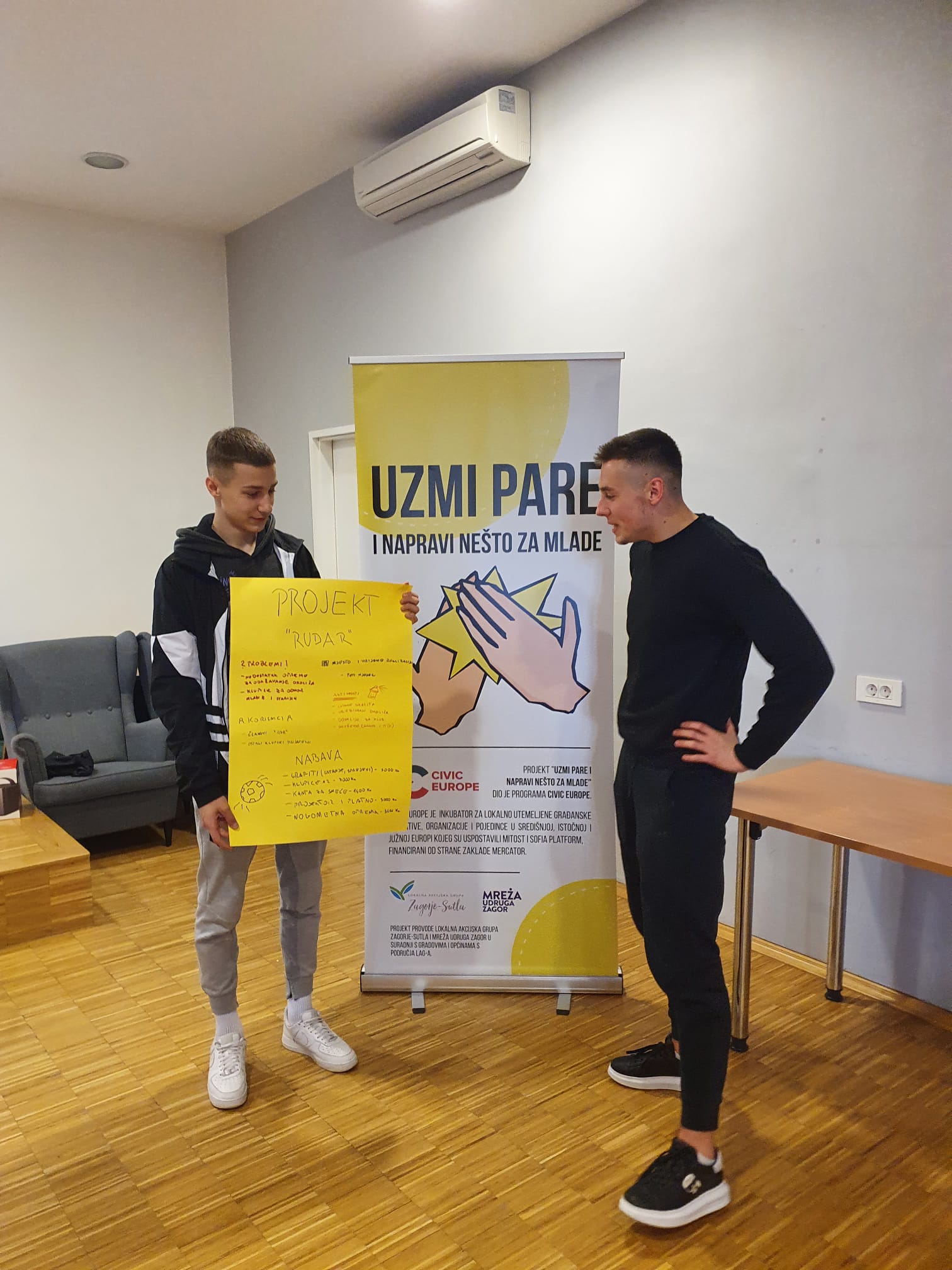
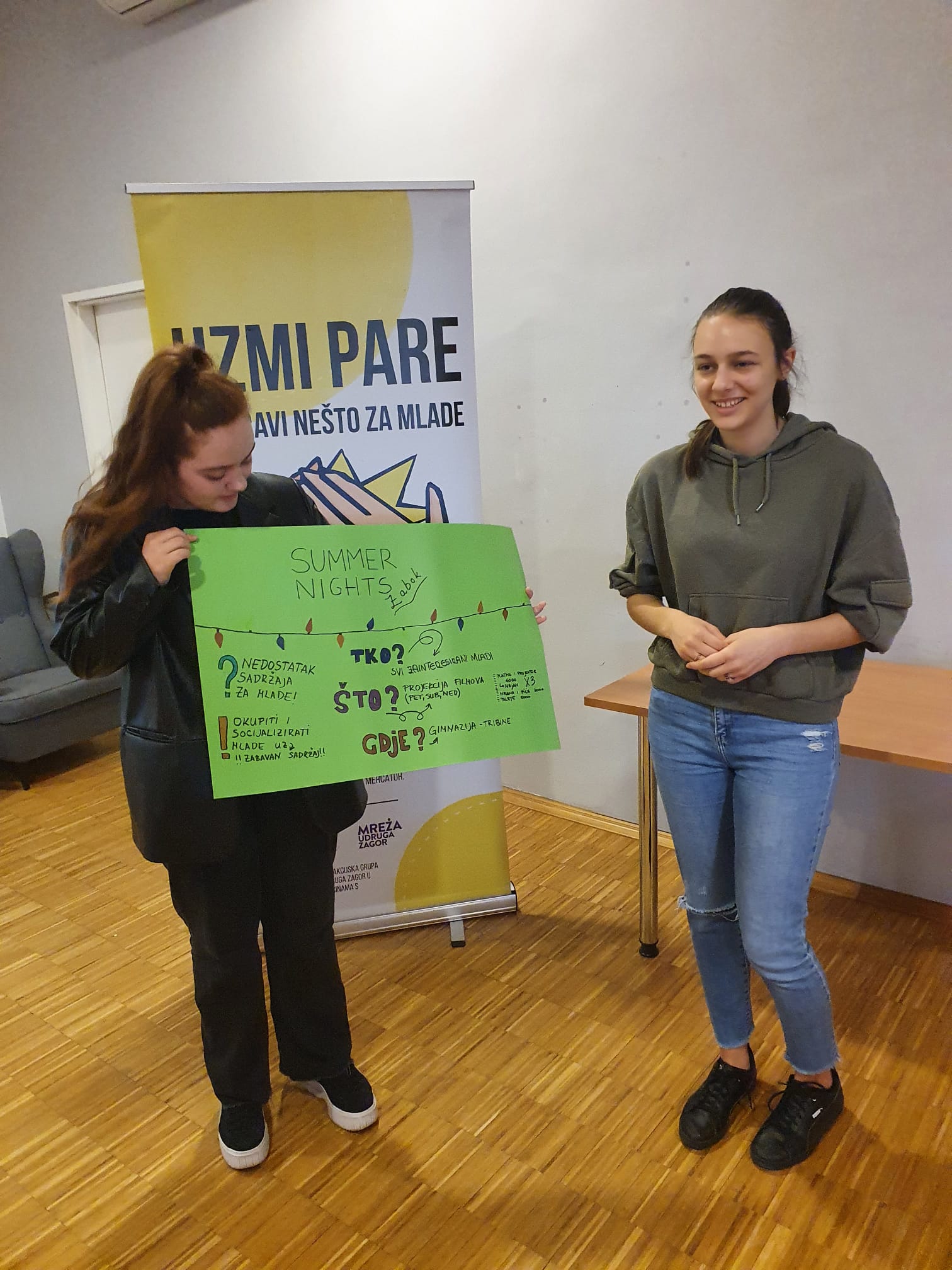
U subotu, 9.4.2022. održali smo radionicu na kojoj su mladi mogli predlagati svoje ideje i to u Gradu Zaboku.
Prva ideja koju su predložili naši mladi je projekt „Rudar“ kojim se želi očistiti okoliš, postaviti klupice za odmor te osvježiti mjesto crtanjem murala.
Druga ideja je „Summer nights“ kojom se želi okupiti mlade kroz kino projekcije na otvorenom uz ostale popratne zabavne sadržaje.
Osim mladih na radionici su sudjelovale i predstavnice grada Zaboka koje su istaknule zadovoljstvo predstavljenim idejama i inicijativama koje mladi sad već iz godine u godinu predlažu.
Projekt “Uzmi pare i napravi nešto za mlade vol. 3” financiran je sredstvima Središnjeg državnog ureda za demografiju i mlade kao i iz proračunskih sredstava općina i gradova koji u projektu sudjeluju.
Pročitaj više...

ODRŽANA JE ZAVRŠNA KONFERENCIJA U SKLOPU PROJEKTA “AKTIVNI MLADI, EFEKTIVNI REZULTATI”

Danas, 5.4.2022. održana je završna konferencija u sklopu projekta „Aktivni mladi, efektivni rezultati“. Na konferenciji su sudjelovali učenici/ce iz Srednje škole Bedekovčina, Srednje škole Krapine i Gimnazije Antuna Gustava Matoša, Zabok. Na samom početku svim prisutnima su predstavljene aktivnosti koje su održane tijekom projekta te njihovi zaključci. Također, učenici/ce navedenih škola su predstavili akcije koje su proveli u sklopu projekta te njezine rezultate. Putem metode word cafe-a učenici/ce su imali priliku iznijeti svoje komentare/prijedloge vezane uz rad Vijeća učenika te probleme i potrebe mladih.

Projekt “Aktivni mladi, efektivni rezultati” provodi Mreža udruga Zagor u partnerstvu sa Srednjom školom Bedekovčina, Srednjom školom Krapina te Gimnazijom Antuna Gustava Matoša, Zabok.

Projekt je financiran u okviru Erasmus+ programa kroz Ključnu aktivnost 3: „Projekti dijaloga s mladima“.

Pročitaj više...

STORY OF MLA-DOST.DOBRO MAGAZINE

Hello! I am so happy and excited to write this article. Because we finished everything and mla-dost.dobro magazine is published in April. 

First I want to introduce myself and explain how we started to publish mla-dost.dobro magazine. I am Evin Arslan. I am from Turkey and I am here to volunteer in Mreža udruga Zagor. Most young people go to another country owing to the European Solidarity Corps Project. I am one of them. Before I came here, I was living in Istanbul and I was working at a newspaper. I was working as a reporter/correspondent. I like to write articles and news. When I came here, I wanted to continue journalism. When I told Ivana my magazine idea, she liked this idea and she really supported me. 

We had our first meeting with young people. Gabrijela Rogan, Tin Krznar, Rebeca Jana Bačani, Marija Gebert, Erkin Duman, Ivana Radanović joined. We talked about the magazine process and the name of the magazine. Paula Petrinec couldn’t join but we kept in touch all the time. 

When you read this magazine, you will see these names. Erkin, Marija, Paula, Gabrijela wrote so good articles for this issue. Graphic Designer Marija Gebert explained the tips and tricks of design. Erkin Duman wrote a very fascinating story. Paula told her Erasmus experiences during the Covid times, Gabrijela wrote about the interesting hobbies of artists and Katarina drew the illustration for Earth Day, 22 April. Also, I had an interview with professional dancer Margareta Sinković. She is very talented and she told very important things about contemporary dance and performance art. 

Maybe you can ask why you need this magazine. We wanted to make this magazine because we wanted to create free space for young people. Young people can find articles about youth, culture art, dance, movies and more! Also, young people can send us their articles. If you have an idea for articles, feel free to write to us. We are open to new ideas. 

When I finished this article, I wanted to say thanks to Mreža udruga Zagor’s colleagues for supporting us. Also thanks to photographer Luka Smuk for sharing his photos for the Margareta Sinković interview. 

I hope you will enjoy it when you read this magazine!

https://www.zagor.info/Cms_Data/Contents/ZagorInfo/Folders/Dokumenti/~contents/EW82ZYXNCG6BBK27/mla-dost-dobro-magazine.pdf

Vidimo se u sljedeći mjesec!

Writer: Evin Arslan

Photos: Erkin Duman

Pročitaj više...

ERASMUS TRIP TO PORTUGAL (DURING COVID TIMES)

When the applications started and during the whole process of applying to the program, I thought I had zero chance of going to Portugal. The coronavirus had just reached Europe and suddenly no one knew what was happening and what are they doing. 

It was my last year of undergraduate study at University of Rijeka, and I was looking forward to doing my three-month practice in the hotel at the place where I live. When corona came, that was cancelled immediately and I ended up being at home for three months, bonding with my parents, having existential crisis and discovering new hobbies, like drawing and doing yoga. But all that free time led to applying for an Erasmus exchange in Portugal which would happen in the beginning of 2021. I applied to a few universities in the city of Porto and got accepted to ISAG, the private faculty. 

As I was gathering and sending all the documentation needed, I never fully believed I would actually go. Even when I booked my flight and paid for the first month of my rent – I made sure that I can get all that money back in case of the corona going crazy. To be clear, the corona went crazy, especially in Portugal, but I could still move there because I had a valid reason – to study at their University. For others who wanted just to travel, Portugal was not an option at that time. Therefore, I went, I packed two large suitcases and went abroad to live with people I’ve never met before. That is one of the top reasons I’d go again, the excitement of meeting new people from different countries and cultures. 

If I had to describe my Erasmus experience in a few words, it would be fulfilled, inspiring and stressful. I risked failing my exams in Croatia to go to Portugal and I wrote my masters there. So, last two months I spent on my computer in our beautiful garden, writing my thesis and studying for exams on both universities (Portuguese and Croatian one) while my Erasmus friends got to and go on trips. So, if you are thinking of going on an Erasmus exchange, maybe don’t do it on your last year if you don’t want to longer your studies. I made it all work in the end and I kept telling myself: ”Isn’t it better for you to be stressed out in Portugal at the ocean beach, than at home?”. And it really was better.

The corona restrictions in Portugal were very different than at home – we had to wear masks all the time and everywhere (outside as well), the police was going around on their bikes giving people fines for not wearing a mask or being outside their part of town, being in larger groups etc. We were trying so hard to maintain our social life, so we gathered in our apartment, which did not go well since our landlord threatened to kick us out because of the noise. But then, they opened the borders to other municipalities in Portugal – we started travelling around in rented cars and enjoying every step of the way. We visited many places from North to South. Those were amazing times with amazing people. 

Regarding University I was studying at – I’d say I am pretty satisfied. I enrolled in five classes which were all about marketing, event management, communication and content production. My schedule was not so tight, so I had enough time to explore around the city and surroundings. The faculty International Relations Office was always here to help and they were more than welcoming, and so was Erasmus Student Network (ESN) Porto. Portuguese people are usually really easy going and they always have time for everything – no rush at all. I liked that because it felt like home. 

I can freely say that I met friends for life in Portugal, from all around the world, but Portugal also became my home away from home. If you are a student who’s thinking of going on Erasmus exchange – I would encourage you! Don’t think about it too much, just accept the opportunities and enjoy it as much as you can, while you can. You can join the ESN in the city you are going to and hang out with locals and other Erasmus students, attend the events and get amazing discounts on rent-a-car, bikes, restaurants, even flights with Ryanair! For many countries, the Erasmus scholarship you get is often enough (I got €720 per month), although for me it wasn’t since I decided to travel the country and Portugal in general is not considered cheap. I had few student jobs that helped me go through and a little bit of help from my parents. 

There are also many options for Erasmus if you are not a student – you can volunteer in other countries or participate in short-term projects like I did in Slovenia and Latvia. You always come back just a little bit richer in experiences and with few more friendships.

Writer: Paula Petrinec

Pročitaj više...

SAVJETI ZA DIZAJN

Skupi programi za dizajn često su nedostupni široj publici. Oni koji se ipak odluče kupiti neki program kako bi ga koristili za nešto što bi bez problema mogli odraditi i u nekom online software-u ni sami često ne pronalaze alternativni program. Kako ne biste bili jedni od većine nastavite čitati i upoznajte se sa besplatnim software-ima koji su jednostavni i lako je izraditi ono što želite.

Dizajn se dijeli na pixel i vektorsku grafiku. Vektorska grafika predstavlja veličine između vektora te uporabom ovakvih grafika izbjegavamo deformaciju nekog oblika, odnosno oblici su određeni matematički izračunatim veličinama te ih zbog toga možemo bezbrižno uvećavati i smanjivati. Suprotno od toga je pixel grafika koja je zadana veličinama pixela, smanjivanje ovakvih grafika ili fotografija je moguća, no svakim povećanjem gubi se kvaliteta te samim time i izgled grafike.

Najbolji primjer software-a za dizajn su Adobe Photoshop (pixelska grafika) i Adobe Illustrator (vektorska grafika). Na internetu postoji mnoštvo programa koji su bazirani na Adobe-ovim programima, a izdvojeni programi su:

Vectr.com – online; besplatan program  (3 stars out of five – it would be added later in designing magazine)

Vectr je online program koji je u potpunosti besplatan i bazira se na obradu vektorske grafike. Ovaj program zadovoljava bazične zadatke koje bi svakome mogle zatrebati. Od kreiranja raznih oblika pomoću pen tool-a ili linija, ubacivanja teksta ili kreiranje jednostavne pozivnice, plakata, čestitke ili post-a za društvene mreže. Postoje i mane samog programa, kao što su nedostatak alata, fontova i mogućnosti no to ne bi trebalo stvarati probleme ako se radi o jednokratnoj upotrebi kao što je npr. izrada logotipa. Stranicu možete podsjetiti ovdje. 

Photopea.com – online; besplatan program (4 stars out of five – it would be added later in designing magazine)

Photopea je kao i Vectr online program, no baziran je na radu sa pixel grafikom. Ako ste upoznati sa Adobe-ovim Photoshop-om onda će vas sučelje Photope-e iznenaditi nevjerojatnom sličnošću. Photopea sadrži gotovo sve alate kao i Photoshop, izgledom jako identičan program. Prilikom unosa i izvoza grafika, Photopea vam daje mogućnost izvoza i importa .psd datoteka. Stranicu možete podsjetiti ovdje. 

U slijedećem broju otkrijte nove programe, trikove i zanimljive multimedijske sadržaje.

Autor: Marija Gebert – voditeljica ZagorMEDIA radionice 

Pročitaj više...

PRAKTIKUM KREATIVNOG ŽIVOTA ILITI KAKO SU SE TO IGRALI NADREALISTI?

Što je igra, tko se smije igrati, igraju li se i vanzemaljci lovice ili su pak oni više tip osobe za lego kockice? Igraju li se vanzemaljci uopće?

Ako ne znaš odgovor na prvo pitanje, nema veze, ni autor ovog teksta nije dobar s profesionalnim definicijama koje su izašle iz nekih obrazovanijih glava od naše.

Nije bitno ni znaš li koje igre igra neki tamo daleki potencijalni život udaljen od nas miljama i miljama svjetlosnih godina. Zapravo, nije bitno ni vjeruješ li da taj život uistinu postoji.

Bitno je jednostavno pitanje koje je slučajno zapelo u sendviču onih kompleksnih – tko se smije igrati?

E pa, ako misliš da je odgovor apsolutno svatko tko ima želje, kreativnosti, volje i/ili nekoga za igru, apsolutno se varaš! 

Neke igre stvorene su samo za one čije se godine ovozemaljskog života mogu pronaći između brojeva 5 i 99, a neke druge imaju limitiran broj igrača. 

Igre s kojima ćeš se susreti u ovom članku sastavio je Alastair Brotchie u svojoj knjizi „Surrealist games“, a iste su podijeljene u nekoliko kategorija. Nadrealisti su se igrali jezikom i  govorom, vizualno su eksperimentirali, mijenjali svoju zbilju i tako stvarali umjetnost. Iako same igre neće potaknuti tvoje tijelo na stvaranje hormona potrebnih da bi dobio Salvador Dali brk, zasigurno će pomoći u kreiranju tvoje unutarnje mini verzije tog ekstravagantnog i genijalnog umjetnika.

Upute za korištenje“ 

Materijali: 1. Stari bakini recepti/ Ikea upute za sastavljanje kauča

                    2. Olovka

 Jedna od igri kojom su se nadrealisti služili u stvaranju poezije bila je „Upute za korištenje“. 

Uzimali bi recepte iz kuhinje ili upute za korištenje određenih alata/predmeta te bi ih zatim primijenili na različitim konkretnim i apstraktnim pojmovima. 

Za primjer koji možete vidjeti zaslužan je Jean-Claude Silbermann. 

Automatsko crtanje

Materijali: 1. Flomaster/Olovka/Tuš za oči/Kist

                    2. Komad papira

Automatsko crtanje odraz je naših instinktivnih pokreta. Zanemarujemo trenutni vrtlog misli koje nas opsjedaju i crtežu pristupamo uz minimum svjesne kontrole. 

Automatsko crtanje najlakše je i najzabavnije kada zatvorimo oči i prepustimo ruci da radi što hoće.

Iako nam pravilo ove igre nalaže da olovku cijelo vrijeme držimo na papiru, ako se želimo uistinu predati apstrakciji, možemo ga i zanemariti.

Upravo u neočekivanosti i nepredvidivosti konačnog rezultata leži zabava.

Pro tip: automatsko crtanju možemo pristupiti i kao temelju za daljnji rad na crtežu, a ne samo kao konačnom rezultatu.

„Exquisite corpse“

Materijali: 1. Flomaster/Olovka/Tuš za oči/Kist

2. Komad papira

Ova najpoznatija nadrealistička igra namijenjena je za 2 ili više igrača.

Ako igra ima 3 igrača, svaki igrač presavije svoj papir na 3 jednaka dijela. Prvi igrač crta u prvom dijelu papira te rubovima svojeg crteža minimalno prelazi na drugi dio papira po kojem će crtati igrač broj 2. Kad igrač broj 1 završi crtež, svoj dio presavije tako da je skriven od igrača broj 2. Igrač broj 2 nastavlja svoj crtež, a startna točka su mu  rubovi crteža igrača broj 1 kojima je ovaj ušao u prostor igrača broj 2. Kada je igrač broj 2 gotov sa svojim crtežom, prosljeđuje ga igraču broj 3 i igra se nastavlja.

Najvažnije je da igrači ne vide crtež prijašnjeg igrača te da se ostave linije vodilje za sljedećeg igrača koji će crtati kako bi crtež ipak imao određenu strukturu.

Autor: Gabrijela Rogan

Photos: Brotchie Alastair: A Book of Surrealist Games

Pročitaj više...

“CONTEMPORARY DANCE TO ME IS A WAY OF CONNECTING WITH OTHERS”

Margareta Sinković who is 23-years old is a professional dancer. Sinković who studied Academy of Dramatic Art at University of Zagreb gived contemporary courses and organized movie days about performance art. She explained her dance journey…

  •  First, how did you decide to study dance and start contemporary dance?

I had started with the ballet lessons when I was four and I liked that a lot so I had enrolled in School for classical ballet years after. It was there where I was introduced to the modern ballet in which I had the opportunity to create by my own and find my own expression without the need to fulfill the perfect form. I have found the most of creative possibilities in contemporary dance and I wanted to learn about it even more so I enrolled in the dance course without thinking about professional career. By taking the lessons and watching the performances, my interest was growing so I decided to start preparing myself for the audition for the Academy.  

  • What does contemporary dance mean to you?

Contemporary dance to me is a way of connecting with others. Ability to express ideas and opinions, my personal way of communication with society. 

  • What kind of prejudices about contemporary dance have you faced so far? 

People mostly don’t know well what it is so they assume that I’m doing ballroom dances, step or any kind of street dances. In a performative context, contemporary dance sometimes can include those things, it can absorb a lot of different approaches to the body and the movement itself, including the martial arts also, but it has its own specific characteristics and technique. The ones that heard somewhere about it or they have some kind of an image of what it could be, they often find it incomprehensible, confusing, sometimes even elitised, reserved only for the artistic world. 

CREATIVITY, BODY, DANCE…

  • You are giving contemporary dance lessons in Zabok. How did you decide to give lessons?

I wanted to share the things that I’ve learned with others. I was lucky and I had a privilege to take dance classes because I had a big support from my parents who wouldn’t mind driving me everyday to Zagreb. I felt the need to give the opportunity to the ones who have the interest for dance, but it is not so accessible to them. 

  • It’s good that young people in Zabok have access to a course like this. Finding a dance course in Zagreb is easy, but in Zabok it can be difficult. What do you think?

I agree. There are no contemporary dance classes in Zagorje, and the dance scene is centralized. Before, there was an enthusiasm for doing the classes and creating a dance scene here, but after some time it faded away. In other parts of Croatia there are some tendencies also, but we are all still focused on Zagreb because there we have better conditions, although not ideal. But nevertheless it is a place where the art scene is and there is an audience who is following it. 

  • Can someone who has never danced before learn contemporary dance? Have you encountered people who are hesitant to attend the course?

Yes, of course. It is interesting that contemporary dance goes into studying the movement itself, not necessarily some dance element, but also the everyday movement. How to move in the most efficient, functional way with the creating the awareness of anatomical connections, one’s own body possibilities and the influence of the gravity. With this body understanding, a lot of different movement possibilities are opening up, one can go even in more complex situations. This is what technique is about. When you add the creative aspect of the dance on top of this, transfering the thoughts and emotions into the movement, it is beautiful what can be made, no matter if the person who is dancing is doing this for the whole life or whether it is somebody that attends the second dance class in life. We have to allow ourselves the freedom to express ourselves, get away from the thought that what we are producing with the movement has to look in a specific way, or to be perfect for somebody that is looking at it from the outside. I definitely try to share this with the others and encourage the ones who are hesitating, I hope that I am successful with it to some extent. Some like it, some don’t and that is completely fine. 

“KINO PLEŠE” IN ZABOK

  • You organized “Kino Pleše” movie days. How did you decide to organize this event? Do movies about performing art reach enough audiences?

Idea for that started during my studies when my colleagues and I were making experimental dance movies. I thought that the things we’ve made were great and that more people should see what we are doing. And in general there is a boom of transfering the performing arts into film and video media, partly because of the huge influence of the movies on the wider audience and partly because of the epidemic. With my tendency to decentralisation of the dance scene, and knowing about the culture events at the Green Room in Zabok, I thought this was the ideal place for the realisation of this idea. 

The number of the audience of the experimental movies and about performing arts is definitely quite smaller than the number of the spectators of the more commercial movies, but it is existing. I even think that the interest for this is growing and that in popular culture since the middle of the 1960’s until today there is a tendency towards the experiment in terms of making the art. But it is only my point of view. 

  • What kind of feedback/reactions did you receive from the audience after projecting a movie?

So far I always got really nice comments, I didn’t get any negative feedbacks yet. But sometimes people don’t want to admit that they don’t like something. I personally think that there is nothing bad about “not liking” something, thinking about what you saw, about what you consume as an audience is far more important. To me, that is the point of art. To make you think, enable you to feel, whether this is the positive or negative emotion and make just a  slight difference in our everyday life. 

  • What would you suggest to young people who want to study at the dance academy?

You just have to keep going and try not to overthink. Mind is blocking us much more often than the body does.

Interview: Evin Arslan

Photos by Luka Smuk

Pročitaj više...

LIGHTS OF THE FUTURE

“She needed a metamorphosis because she would not want to be a caterpillar anymore.”

“Do you know what’s the best thing in the world?” he asked. “ I really don’t care” she replied while she was lighting up her cigarette. It was a breezy, June night, at 3 in the morning, they were on the top of the roof.  Everything was so calm, the city was so dead. Yet, she could still see the lively city lights. Soon they would be turned off one by one as her cigarette fades away.

 She scratched her chin and bit her lip. She could see the fondness of the lights and fake lives of the city.  It was not a person what she was.  Took a deep breath, felt the summer breeze on her shoulders coming from the ocean behind. It was rubbing her tend skin. Lift her head and looked at the starry sky. Closed her eyes and tried to listen to the melody of the universe. She really desired to be alone. Because she was tired of being among the people. “ Is it the life that you are living to?” she asked. “What do you mean?” he asked. “Nevermind,” she said. She would know that he would not understand any of her speech. It was not even worth losing a single breath for that, she thought. Maybe she was pretending too arrogant but she was feeling that it was the time for transformation. She needed a metamorphosis because she would not want to be a caterpillar anymore. She would like to spread her wings and fly across to the moon and thrive in the dust to the universe and the way unknown. Sipped the last straw of the alcohol and climbed to the fences. “ What is passing in your mind ?” he shouted. She smiled. “ I just want to bring my rains.”. “I really don’t get  what you are talking about,” he said. “ Does it matter what I am saying?” she turned and whispered. “ Of course!” he said. “ Well, why?” she came closer to him. He stuttered. “ C- cuz I like you”. This sentence made her laugh. “Is that all ? That’s simple?” He continued “ I do care about you” She laughed again “You do?” swung her head right to left and went inside. Took her bag and tightened up her hair. Put on her shoes and went out. Pushed the button of the elevator but it was the slowest thing she has ever seen in her life. Rolled her eyes and went downstairs.  She wanted to get lost in the streets of her favourite city. Reckless, she walked down to the city. She could hear the music. The music of nature. The symphony of the cosmos. She wanted to be a note of this perfect philharmonic.

While the purple and red neon lights that blended by the morning mist reflecting on her face, she raised her head and looked up skyscrapers rising from the ground. She could not breathe when she felt being surrounded by such an environment. She got excited like a wanderer who sees a mirage in the middle of Sahara when she saw the tree standing ahead. She had her mouth gaped open wide. With the dizziness that the alcohol gave, by teetering in the concrete jungle, she sat down under the tree.  She looked at the beam that the billboards transmit and the sizzling wires above. She thought about the meaningless conversation that she just had. Are people really getting such dull? Don’t they want to comprehend? Or she just cannot express herself well enough? While the thoughts were running inside of her head, the sourish feeling made her feel sick to her stomach. She gulped sourly. By flipping her hair back, she covered her face. She wanted to cry her eyes out. Maybe that was the only emotion she could feel at that moment. She was feeling alone in this robotised world. Not a robot world but a robotised world. Because she was wishing to believe that there is someone who can still feel something somewhere. She knew that It will not take a long time. She was thinking that soon, not only the souls but also the hearts will be automatised. Well, why did she care about it that much?  Yet, while she was loving this electrical city madly. Was not she a part of this city? She took a deep breath. She looked at her digital watch. The two blinking dots were showing four-thirty five in the morning. With smaller dots, the date was indicated as 2041. Soon, the sun will rise and people will wake up and go to their works as if nothing happened. They will have lunch, work all day long and will come back home in the evening. While that thought occurring in her mind, she stared at the date written on her watch. How come the time has flown such quickly? As if the small girl was not herself who used to capered in these streets once upon a time. Like she suddenly grew up and this digital city has grown up with her together as well. While the building painted in white stretching out the sky, she transformed into an illusion. Well, what was making her sad?  Elapsing or the alteration of this city? Why she was so angry? To herself or others? She tossed the warm water that she pulled out of her bag. She went with the flow of the pick-me-up. After she had cleaned her mouth with the back of her hand, she put the bottle back into her bag. She stood up and dusted off. She walked home by being captive of her thoughts. She came home. After she had thrown her bag to the entrance, she clumped to her room. She stared at the ceiling. She was trying hard to not get lost in her mind. She conditioned herself to stay in the moment. “ Just watch your thoughts” she murmured. Her lips vibrated. That shiver captured her once again. She closed her eyes while the morning breeze coming from the open window was mixing her thoughts and caressing her body. Soon, she will have woken up, gone to work and then had her lunch. She will be working all day long and will come back home in the evening.

Writer: Erkin Duman

Photo by Deniz Atasoy

Pročitaj više...

Europska godina mladih 2022.

Mladi su kroz prethodne dvije godine naišli na mnoga ograničenja. Povodom mjera koronavirusa bio im je limitiran društveni život i otežano obrazovanje. Kao odgovor na strpljenje i solidarnost koji su mladi pokazali pridržavanjem mjera, Europski parlament je donio odluku da se 2022. godina proglasi Europskom godinom mladih. Više informacija o tome što će se novo za mlade osigurati i što se od njih očekuje saznajte u članku. 🙂

Europska godina mladih 2022

Pročitaj više...